A pergola defines your outdoor space the way walls define a room. It creates overhead structure, frames views, supports lighting and shade, and turns a flat patio into a place that actually feels like somewhere. In Austin, where we spend the majority of the year outside, a well-built pergola is one of the most functional additions you can make to your property.
Here is everything you need to know before building one — from materials and permits to cost ranges and design details we have learned from building pergolas across Central Texas for over 15 years.
Pergola Materials: What Works in Texas
Material choice determines how your pergola looks, how long it lasts, and how much maintenance you are signing up for. Here are the four materials we work with most in Austin:
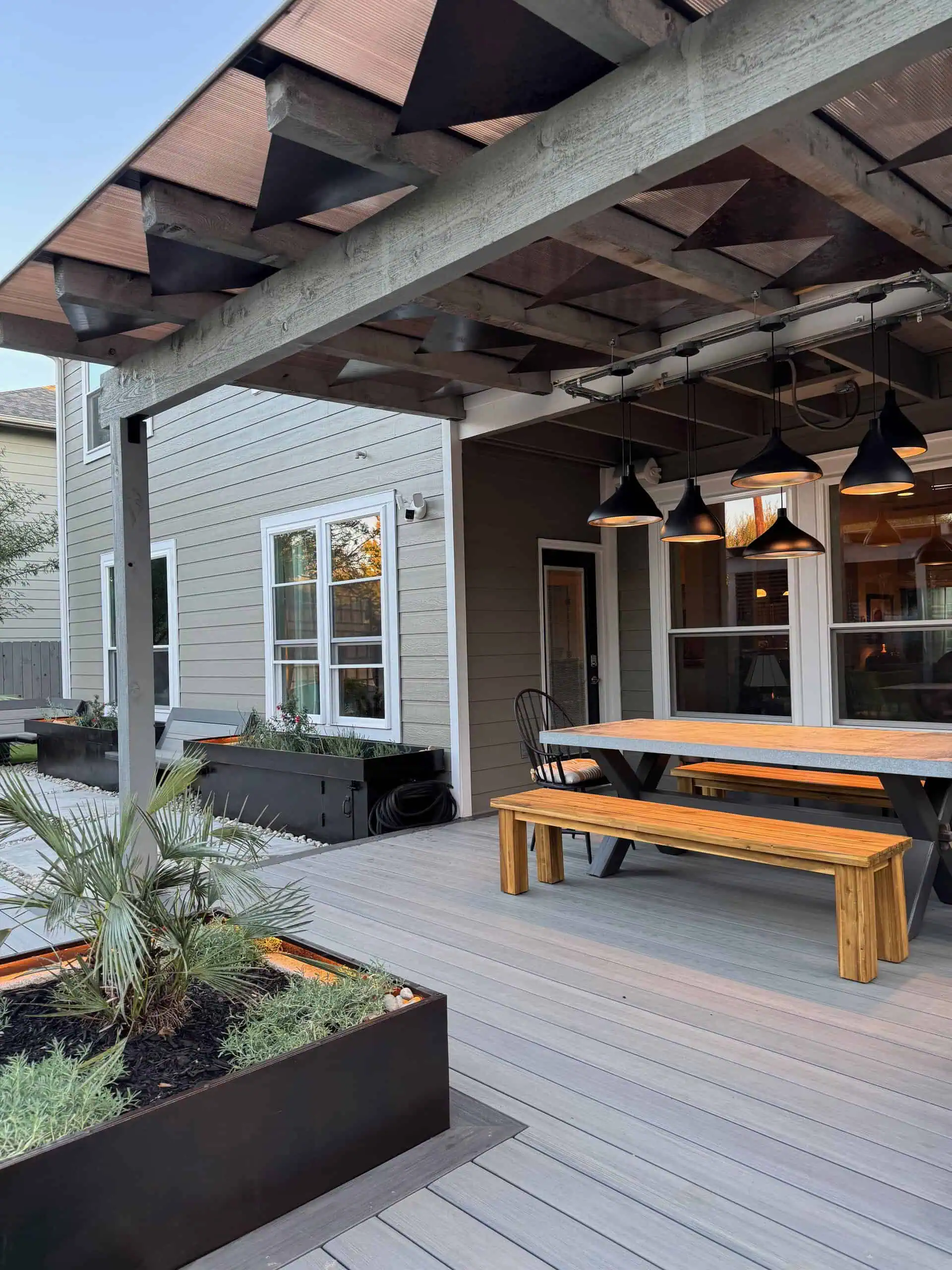
Steel. Our most popular pergola material. We fabricate from 3x3 or 4x4 square steel tubing, welded on site, then powder-coated in matte black, bronze, or custom colors. Steel pergolas are clean-lined, modern, and essentially maintenance-free. They do not warp, rot, crack, or attract termites. The powder coating handles UV and rain without fading for 15–20 years. Steel pergolas start around $12,000 for a basic 10x12 structure and go up from there depending on size and complexity.
Cedar. Western red cedar is the traditional choice for wood pergolas in Texas. It has natural oils that resist rot and insects, weathers to a silver-gray if left untreated, and can be stained to maintain its warm reddish tone. Cedar is lighter than steel and has a softer, more organic feel. A cedar pergola typically runs $8,000 to $18,000 depending on size. Plan on re-staining every 2–3 years to keep the color.
IPE (Brazilian hardwood). IPE is the premium wood option. It is one of the densest hardwoods in the world — it does not rot, resists insects, and has a 50+ year lifespan with minimal maintenance. The material cost is roughly 3x cedar, but you are building something your grandchildren will use. IPE pergolas typically run $18,000 to $35,000. The wood starts chocolate brown and silvers naturally if left unfinished, or can be oiled annually to maintain the dark tone.
Aluminum. The lowest-maintenance option. Modern extruded aluminum pergola systems come in a range of profiles and can include integrated motorized louvers that open and close for sun and rain control. These are essentially outdoor roof systems. Aluminum pergolas with operable louvers start around $20,000 for a 10x12 footprint and go up quickly with larger sizes and automation.
Austin Permit Requirements
This is where most homeowners get confused, so here are the facts:
- Pergolas over 200 square feet require a building permit from the City of Austin. A 14x15 pergola is 210 sq ft, so most functional pergolas will need a permit
- Pergolas attached to the house require a permit regardless of size, because they become part of the building structure
- Setbacks: Your pergola must meet the same setback requirements as other structures on your lot. Typically 5–15 feet from side and rear property lines depending on your zoning
- Impervious cover: If your pergola has a solid roof (not open rafters), it counts toward your lot's impervious cover limit. This can be a real constraint in older Austin neighborhoods with tight lot coverage allowances
- HOA approval: If you live in a neighborhood with an HOA, you will need architectural approval before pulling a city permit. Start this process early — HOA reviews can take 2–6 weeks
We handle all permitting as part of our design-build process. We draw the plans, submit to the city, manage revisions, and schedule inspections. You do not have to set foot in a permitting office.
Pergola Cost Ranges
Here is what you should budget for a professionally designed and built pergola in Austin, including footings, finish, and basic electrical for lighting:
- Basic cedar pergola (10x12): $8,000–$14,000
- Steel pergola (10x12): $12,000–$20,000
- Steel pergola with privacy walls (12x16): $18,000–$30,000
- IPE pergola (12x14): $18,000–$35,000
- Aluminum louvered pergola (10x12): $20,000–$32,000
- Large custom steel or IPE structure (16x20+): $30,000–$50,000+
These ranges include engineering, permits, concrete footings, the structure itself, and a basic lighting rough-in. Upgrades like integrated fans, shade sails, privacy screens, and advanced lighting systems add to the total.
Designing for Texas Heat and Sun
A pergola with wide-open rafters looks great in a magazine but does not provide much shade when it is 104 degrees in August. Here are the design moves that make a pergola actually comfortable in Central Texas:
- Rafter spacing: Tighter rafter spacing (4–6 inches on center instead of 12–16) blocks significantly more sun. We often use 2x2 steel or 1x3 cedar rafters spaced tightly for a striped shadow pattern that blocks 60–70% of direct sun
- Shade sails or fabric panels: Removable shade fabric between rafters adds another 20–30% shade coverage and can be taken down in winter when you want the sun
- Orientation: Running your main rafters east-west maximizes shade during the hottest part of the day when the sun is high. This is a free design decision that makes a real difference
- Fan integration: A 60-inch outdoor ceiling fan under a pergola drops the perceived temperature 8–10 degrees. We rough in electrical for fans during construction so it is ready to go
Lighting Integration: WLED and FCOB
Lighting is what transforms a pergola from a daytime shade structure into a nighttime destination. We specialize in two systems that are a step above standard landscape lighting:
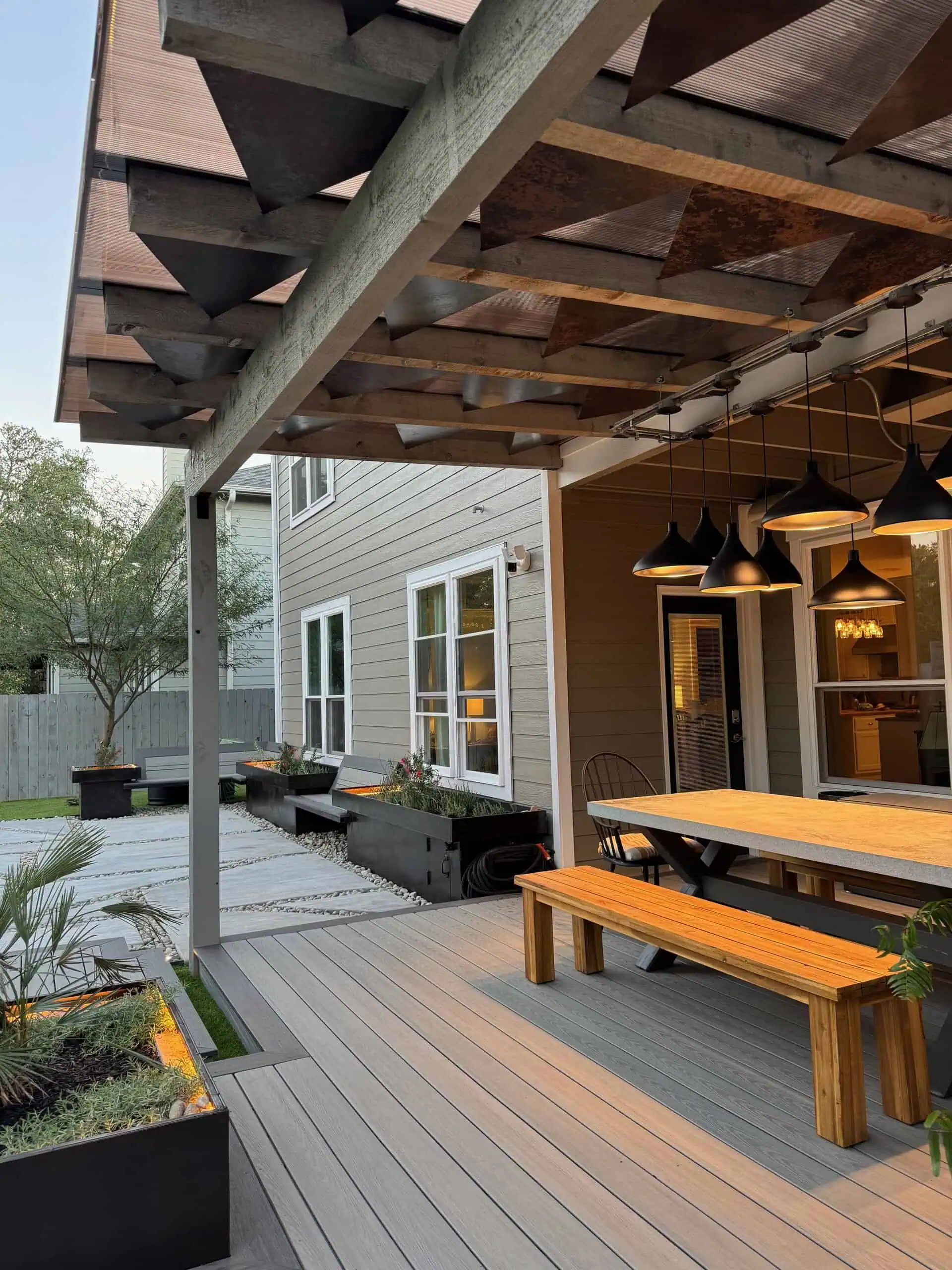
WLED (White LED) strip lighting runs along the underside of beams and rafters, creating a warm ambient glow. We channel-mount the strips in aluminum extrusions so you see light, not the strip itself. The effect is a soft wash that makes the entire pergola ceiling glow.
FCOB (Flip Chip on Board) is the next generation. Unlike standard LED strips with visible dots, FCOB produces a perfectly continuous line of light with zero hot spots. It is the difference between a dotted line and a solid line. We use FCOB for rafter underlighting where the strip is visible at eye level and the dot-free output matters.
Both systems run on low-voltage transformers with dimmers and smart controls. We can integrate them with timers, motion sensors, or smart home systems so your pergola lights come on automatically at sunset.
Privacy Walls and Shade Additions
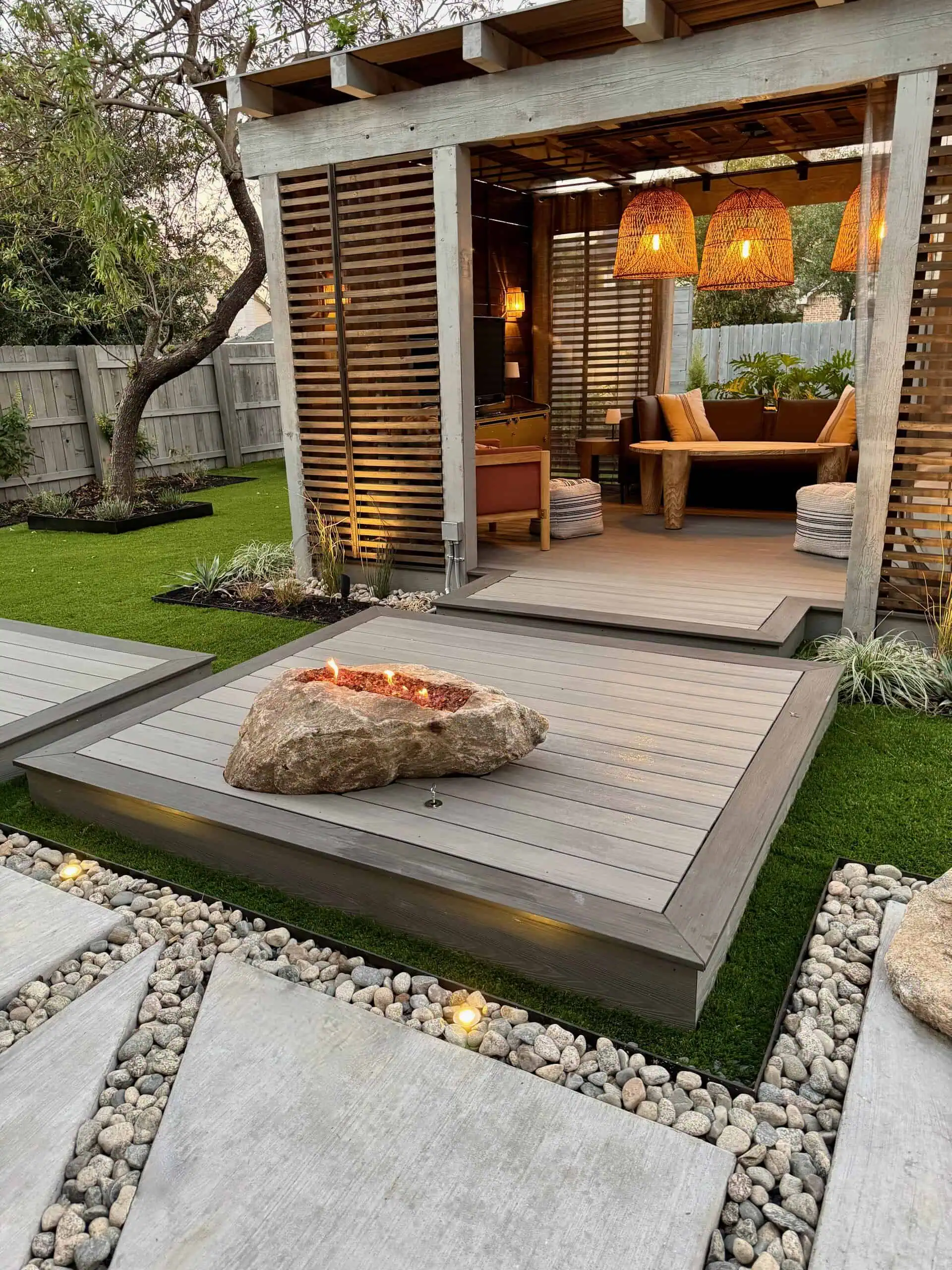
A pergola with privacy walls becomes a true outdoor room. We build privacy screens from the same material as the pergola — horizontal steel slats, vertical cedar boards, or composite panels — so everything matches. Privacy walls are especially useful along property lines where you want to screen a neighbor's view without building a full fence.
For shade, we offer retractable fabric canopies, fixed polycarbonate roof panels (which let in light but block rain), and living shade walls with climbing vines on steel cable trellises. Star Jasmine and Crossvine are our go-to climbing plants for Austin — both are evergreen, fast-growing, and handle the heat.
Get Started on Your Pergola
Whether you want a simple cedar shade structure or a full steel-and-IPE outdoor room with lighting, fans, and privacy walls, we will design it to fit your yard, your style, and your budget. Every project starts with a free on-site consultation.
See examples on our pergola services page, or request your free estimate to start the conversation.